
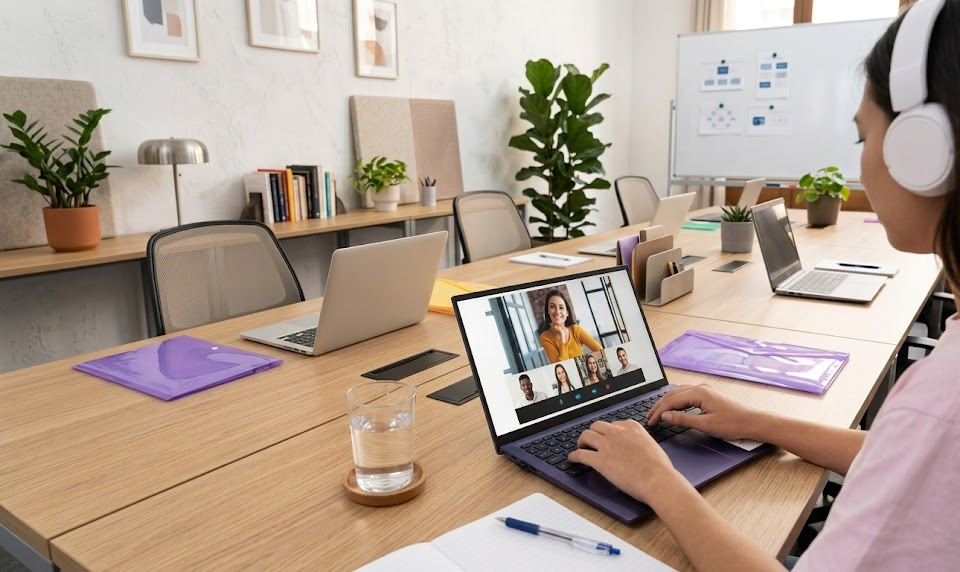
Remote work offers flexibility, but it can also lead to a lack of clear career growth paths. Employees often learn from each other simply by overhearing conversations or joining impromptu discussions in a traditional office. But that becomes difficult to achieve in remote work. Without these informal interactions, remote workers feel stagnant and feel stuck in their careers.
Currently employers are focusing more on upskilling and reskilling their current employees instead of hiring new ones. According to data from People Management, about 30% of organisations say this is their top priority. As artificial intelligence (AI) and automation change job roles, teams that do not adapt risk instead become irrelevant.
At Office Productivity Network, we help enhance workplace productivity with customised HR strategies, drive efficiency, engagement, and success for your team and organisation. In this guide, we provide practical ways for team leaders and remote workers to integrate learning into their daily tasks. It aims to transform professional development from a low priority into a key advantage.
How to Create a Learning Culture for Remote Teams
Here are some ways to make learning stick for remote teams:
1. Turn Your Weekly Briefing Into a Learning Moment
Several remote teams have a weekly check-in. Change the first five minutes by asking one person to share something they learned in the past week. It can be informal, like a useful article, a tip from a client call, or a shortcut they found in a tool the team uses daily.
This encourages responsibility without causing stress. Over time, it becomes clear that sharing knowledge is important and appreciated. The meeting format remains the same, but the culture improves.
2. Create a Shared Digital Learning Space
A dedicated Slack channel, a Notion page, or even a shared Google Doc called “Things Worth Knowing” allows people to share discoveries in real time.
This method works because it allows for asynchronous communication. For example, someone in Edinburgh can read an article at 7 am, and a colleague in Manchester can see it at noon. No meeting is needed, and knowledge continues to flow.
Encourage managers to take part as well. When leaders engage in learning, it shows that professional development is important for everyone, not just junior staff.
For a clearer picture of how to make this work in practice, take a look at this practical guide on ways remote and hybrid teams are using to fuel growth.
3. Give People a Learning Budget They Actually Use
A learning budget that is hard to access is not helpful. A budget that needs approval from six different people is not helpful; it creates obstacles.
Make the process easy. Provide a monthly or quarterly allowance, and let employees briefly log what they bought and what they learned. This includes books, online courses, podcast subscriptions, or industry memberships. Allowing employees to choose what fits their role is key.
When employees select their own learning, they finish it. Self-directed development has a much higher completion rate than required training because it relates to what people care about.
4. Introduce Peer Teaching Sessions
Your team has valuable skills, but in remote sessions, this knowledge stays isolated on individual laptops.
To change this, hold a thirty-minute monthly teaching session. In these sessions, team members share something they know well. One person can explain a process they have improved, a useful tool, or a skill they learned outside of work.
This approach serves two purposes: the teacher strengthens their own understanding, while the listeners gain access to knowledge that might not come up otherwise. Most importantly, it helps build connections in a remote environment.
5. Tie Learning to Real Projects, Not Hypotheticals
Training that happens in isolation frequently doesn’t apply to the job. The best learning occurs when it connects to real situations.
When starting a new project, identify one or two skills the team needs to develop. Set aside time to learn these skills while working on the project itself. This could be a short course before introducing new software or an instant overview of an industry before a client presentation.
This method views learning as preparation, not a chore. It feels meaningful because it is.
6. Incorporate Learning Into the Workday, Not Around It
Many organisations make a big mistake by treating learning as a one-time event, like a course or a scheduled session. They see it as something separate from daily work.
This approach quickly falls apart in a remote work environment. People are managing meetings, deadlines, and unique challenges of working from home. Adding a mandatory two-hour training session can lead to frustration instead of growth.
A better option is to integrate learning into existing daily routines.
7. Run a Monthly Retrospective That Includes Learning
Most retrospectives focus on what went well and what did not. Add a third question: What did you learn this month that has changed how you work?
This process doesn’t take long. Ten minutes at the end of a regular meeting is enough. It builds a habit of reflection over time. People begin to notice their own growth. They start looking for things to share in the next retrospective. Learning becomes intentional instead of accidental.
The Result: Reduced Staff Turnover
A remote employee who feels stuck is likely to leave. This isn’t just about low pay or a tough team. Individuals naturally want to grow. When they stop growing, they search for other opportunities.
A learning culture solves this problem. It shows that the organisation cares about the individual, not just their current work.
In a market where replacing a remote employee costs about 33% of their yearly salary, creating a culture that keeps employees through real development is not just pleasant. It’s a smart financial move.
Conclusion
Creating a culture of continuous learning in a remote setting relies more on intentional communication than on strict schedules. When sharing knowledge becomes a regular part of daily work rather than a rare yearly task, team dynamics improve.
This shift leads to better questions, more collaboration, and faster professional growth. These benefits help retain employees and build a stronger workforce.
The right tools and meeting structures are likely already available; the key is using them purposefully to move from “being busy” to “getting better.”If you want to create a learning culture in your remote team, contact us. We will help you develop a strategy that works for your team.

