
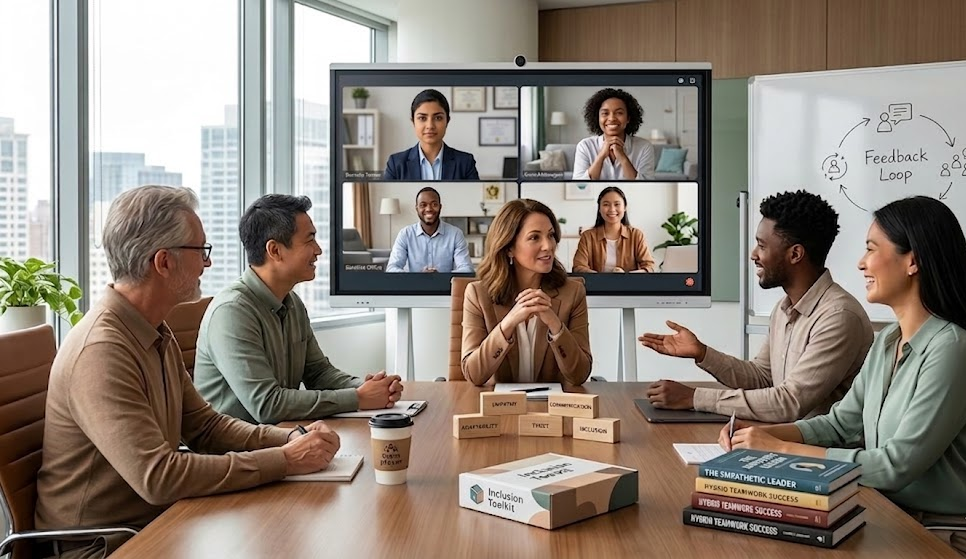
Hybrid work is now the standard for British companies, not just a temporary experiment. While more employees work from home, many management practices still reflect old office-based methods.
Most leaders learned to manage those they could see, which creates a gap in the skills needed to lead from a distance.
According to Owl Labs, 90% of UK employees say a supportive manager is important to their job satisfaction, second only to salary. This highlights the skills a managerial position demands especially in a hybrid setting.
Let’s take a look at five key soft skills for effectively leading teams, whether in person or remotely.
At Office Productivity Network, we enhance workplace productivity with customised HR strategies, drive efficiency, engagement, and success for your team and organisation.
Why the Manager’s Role Has Fundamentally Changed
Managing a hybrid team is different from managing a traditional team. It’s not about who comes in first or leaves last. It’s about creating clarity, trust, and connection among team members in different work environments.
While technical skills helped many managers get promoted, these five soft skills are what will keep their hybrid teams united.
Key Soft Skills to Lead Hybrid Teams
Here are the five key soft skills your managers need to lead hybrid teams:
Skill 1: Intentional Communication
Communication happens easily in a shared office. You might chat by the kettle or share a glance at your desk. Remote employees miss these informal moments in hybrid work.
Intentional communication means setting up clear ways to connect. It involves writing clear messages rather than depending on tone or voice. It also means asking remote workers for their thoughts before the meeting ends, not as an afterthought.
Research by Simon and Simon found that 86% of employees believe workplace failures result from poor communication. This issue doesn’t go away in a hybrid team.
Bridging this gap requires leaders who are not just technically proficient but are also expert communicators. Many organisations now find that partnering with an international communications recruitment specialist like VMA Group is the most effective way to secure senior talent capable of navigating these complex internal landscapes.
A good rule of thumb: if a decision was made during a casual conversation, it should be written down and shared with the entire team. This makes sure no one is left out of the loop.
Skill 2: Proximity Bias Awareness
Proximity bias is when managers unconsciously prefer employees who are physically present. They might not even realise they do it. The person in the office gets chosen for a new project, while the remote employee is overlooked for promotion. It seems natural, but it is unfair.
A good manager questions their own instincts. Before giving out opportunities, they ask themselves: “Am I choosing this person because they are the best fit, or because I saw them in person today?”
Quick Self-Test: Are you unintentionally favouring in-office employees?
Answer Yes or No to the following:
- In the last month, have most of your unplanned or “watercooler” conversations happened only with those physically near you? (Yes/No)
- When you last assigned a high-profile task, was the chosen person someone who happened to be in the office that day? (Yes/No)
- If you had to name a specific career growth opportunity you created this month, does it involve a remote team member? (Yes/No)
If you answered “Yes” to the first two questions or “No” to the last question, you might be experiencing proximity bias in your leadership choices.
Skill 3: Digital Empathy
Reading a room is an important management skill. This means paying attention to video calls, Slack messages, or even when someone doesn’t respond at all in hybrid settings. Digital empathy is the ability to notice emotional signals through a screen.
If a team member becomes silent in meetings, shortens their message replies, or stops sharing ideas in documents, they may require support. A manager who understands the importance of connecting with their team pays attention to early signs of struggle. Instead of just focusing on getting results, they approach team members with genuine interest and care for how they’re feeling.
Developing this skill takes practice and intention. It is important to create a team culture where people feel safe enough to express that they are struggling. For teams to succeed, remote work tools need to be paired with modern management techniques.
For a closer look at how to put this into practice, take a look at this practical guide with examples for remote and hybrid teams that help managers build genuine connections across digital channels.
Skill 4: Structured Flexibility
Flexibility is the main benefit of hybrid work. However, if flexibility is not structured, it can lead to confusion. Who is in the office on which days? When are the core hours for teamwork? When is it okay to be offline?
Structured flexibility is about having clear rules but also giving people the freedom to work in their own way within those rules. A good manager in a hybrid work environment provides a basic framework and then lets the team decide how to get the job done.
One useful practice is the Remote First rule for hybrid meetings. Even if some members are in the office together, everyone should join the video call individually. This creates equal participation. No one will be just a small face on a conference room camera while others take over the conversation. Everyone has the same level of presence.
Skill 5: Trust-Based Leadership
Micromanagement harms hybrid teams. When a manager needs to see constant activity to feel secure, remote workers feel monitored and undervalued. This leads to decreased output and rising resentment.
Trust-based leadership focuses on results instead of hours worked. It involves agreeing on clear goals and then stepping back. It means resisting the temptation to check what someone is doing every Tuesday at 2 pm.
This approach does not eliminate accountability. Instead, it ties accountability to results, not time spent at a desk.
| Management Style | Focus | Effect on Hybrid Teams |
| Activity-based | Hours, visibility, presence | Erodes trust, favours in-office staff |
| Output-based | Results and Outcomes | Builds autonomy, rewards performance equally |
In Conclusion
The move to hybrid work has changed how leaders operate. Success now depends less on being physically present and more on a manager’s ability to understand biases and handle emotions in a digital setting. By encouraging trust and setting flexible but clear boundaries, leaders can help distributed teams reach their full potential.
These soft skills are essential today; they are not just nice additions. As workplaces change, sticking to old office-focused management methods can hurt both employee retention and performance. It’s time to update our habits to meet new standards through focused development.If you want support building these skills across your management team, contact us to discuss what that looks like for your organisation.

